Culture?
The renowned American writer and philosopher David Foster Wallace is perhaps best known for the commencement address he delivered to the graduating class of Kenyon College in 2005. It begins with a short parable:
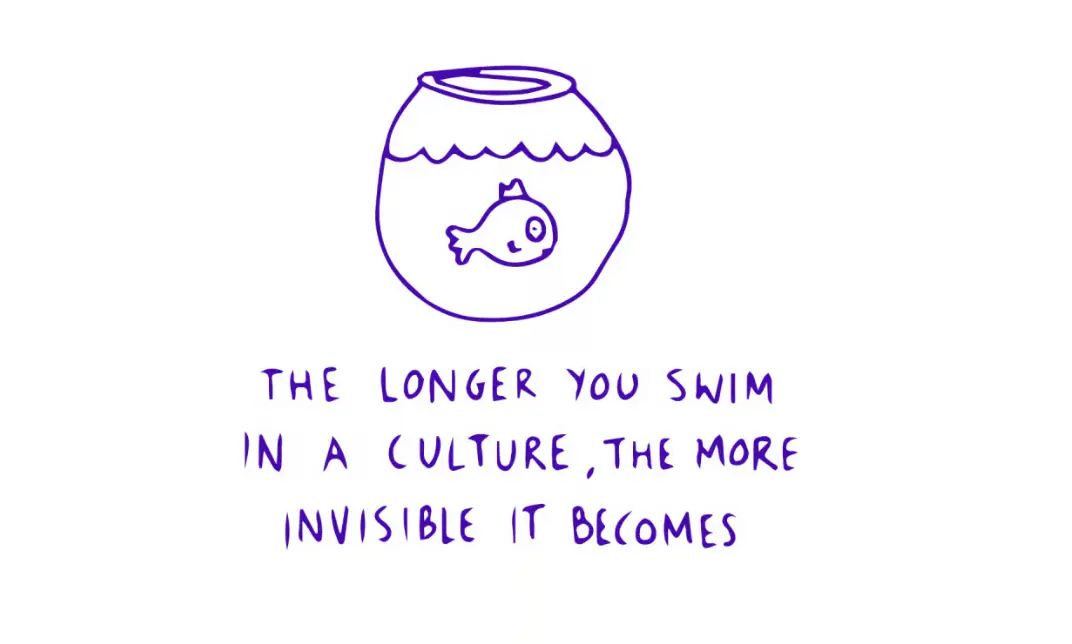
Two young fish are swimming along when they meet an older fish coming the other way. The older fish nods and says, “Morning, boys. How’s the water?” The two young fish swim on for a while before one turns to the other and asks, “What the hell is water?”
The point of the story is that, as human beings, we often fail to notice or describe the simple but essential things on which our lives and well-being directly depend.
The natural environment, the people closest to us, our colleagues, relationships, time… Sadly, we often understand their value only when we are about to lose them—or have already lost them for good.
What is company culture, really?
The same is true of company culture. It is a natural part of everything around us, yet we often struggle to explain what it is or how it works.
We can all quote Peter Drucker from memory:
“Culture eats strategy for breakfast.”
But what is company culture, really? How does it actually work within our company? Do we manage our culture—and if so, how? Or does it emerge on its own and begin managing us?
“Becoming aware of your culture and managing it effectively is more than just a fun team-building activity. It is the key to your success.”
— Mario Moussa
Culture consists of norms and rules—the agreements between people about how we work together every day.
Leaders can choose whether to manage this process actively. If they do not, the rules will emerge on their own and may not work in the way we want them to. We are then surprised by what people did or why they behaved in a particular way.
Sometimes it seems difficult to change and manage something we do not fully understand.
A good first step would be to ask everyone at Monday’s leadership-team meeting three simple questions:
What is our company culture?
How does it manifest itself in our daily work?
Are we satisfied with the culture we have?
When everyone is busy, dealing with “soft” issues may not seem sensible. But if we know that culture eats strategy for breakfast, why wait until lunchtime? What exactly will we do after lunch? ;-)
Culture can only be changed by changing the management system. There is no other way.
Finding answers to these questions every Monday should be as routine as checking whether your car has enough fuel before setting off.
And if there is not enough fuel, it is the leadership team’s responsibility to make sure the tank is filled before the journey begins.